
With a radical visual approach and technical choreography behind JUNTOS’s feature film, the movie bets on color and the long take as tools of denunciation against financial abuse.
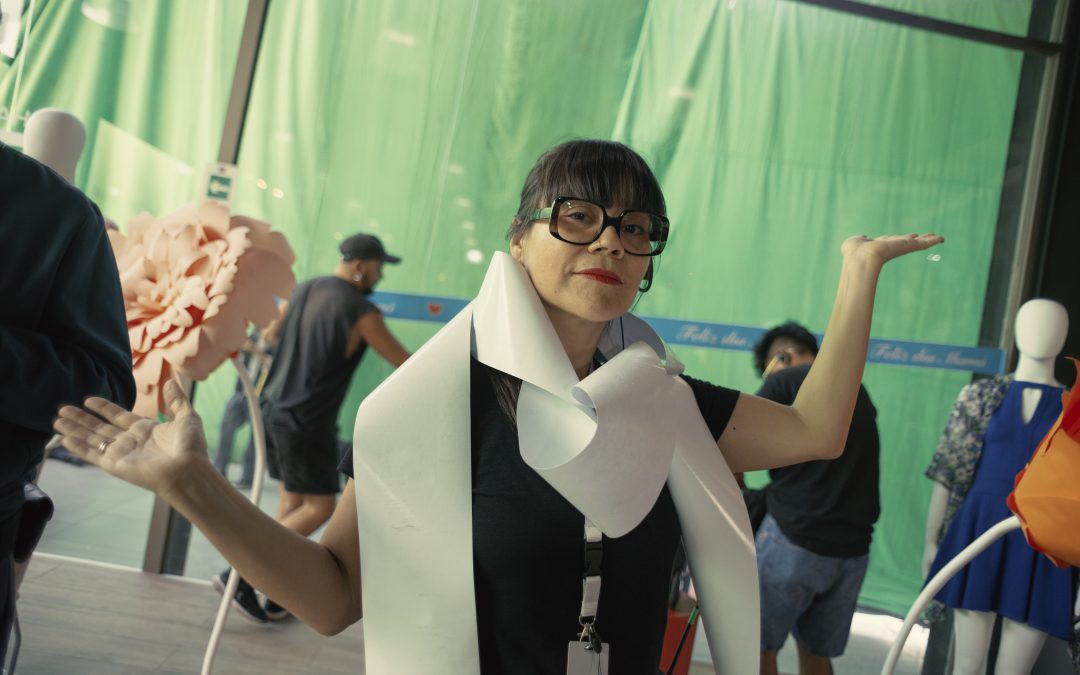
Cinema is also written through the materiality of its spaces. In the final stages of production for Que Se Acabe Todo, the new film by JUNTOS, visuals emerge as one of its most radical and attractive components. Behind this aesthetic architecture is Marichi Palacios, a theatrical designer trained at the Universidad de Chile with more than 20 years working on the country’s prominent audiovisual productions, ranging from Sexo Con Amor and Los 80 to La Casa De Los Espíritus, a series recently premiered on Prime Video.
“A production designer is responsible for devising the world where this story will exist. It’s about transforming paper into something tangible: houses, wardrobe, and characterizations that contain the characters,” Palacios explains about her craft.
For the art director, the urgency of Que Se Acabe Todo lies in the underlying theme: the financial abuse that inspired the script. “I felt the story was important because it hits the pockets of all Chileans at a level of brutal impunity. It is a necessary film that portrays a collective frustration that the country seemed to care very little about,” she states.
Art on the Set of Que Se Acabe Todo
The film’s aesthetic approach is the result of a long-term maturation process. “Marichi is a traveling companion on this project who has been involved with the film for a long time. This has allowed the visual proposals to mature over years,” comments director Moisés Sepúlveda, who defines the relationship with Palacios as an exercise in absolute trust: “It’s like that theater game where you fall backwards and your companions catch you. With her, we allowed ourselves to leap into a risk zone that was incredibly rejuvenating.”
The major risk zone for this production was the long take (plano secuencia), a decision that forced the art team to work with choreographic precision. Since they couldn’t dwell on minute details, Marichi bet on radical visual choices.
“With a long take, the visual construction has to deliver a striking blow. We designed a color journey where red represents ambition: the film begins in cold, dehumanizing tones only to transform into a red atmosphere filled with betrayal and pain,” she comments.
“We bet on a very radical chromatic universe that uses visual contrasts as an expressive element. The big challenge was building visual bridges and transitions that gave the sensation of spaces connecting with one another fluidly,” the director explains.
Filming the long take transformed the art team into performers of a real-time choreography. Behind the camera, crew members operated physical modifications to the space while the lens remained in motion. In specific sequences, such as the call center scene, rooms went from absolute emptiness to being fully inhabited in a matter of seconds.
This dynamic was possible thanks to an ecosystem of absolute creative freedom on set. “I found a very mature Moisés, with a well-digested script and total confidence in what he was doing. We were two brains with one idea and a beautiful level of freedom. I hadn’t enjoyed a job this much in years,” Marichi concludes.
In co-production with Jaque Content, Que Se Acabe Todo is currently fine-tuning the final details of post-production in Argentina, consolidating a proposal where production design is not a mere backdrop, but part of the living body of the narrative.